An asphalt shingle roof typically costs $13,500 to $27,000 installed in Middle Tennessee in 2026, or $450 to $900 per roofing square. Architectural shingles, the mid-range grade, run $15,000 to $21,000 on a typical home, and the full span from economy to designer is $12,000 to $30,000. A repair costs a few hundred to a few thousand dollars, depending on whether water has reached the decking.
Three numbers most cost guides leave out, and this one does not. A residential re-roof permit in Davidson County costs $135 on a $20,000 job. Williamson County charges $110 on the same job. Nashville requires no permit at all for a repair covering 33% or less of the roof.
Those figures come from the Metro Nashville and Williamson County fee schedules, wage data from the U.S. Bureau of Labor Statistics, lifespan ratings from InterNACHI, and national price benchmarks from This Old House. Everything below is current as of September 2026.
Quotes across the metro genuinely span that full range, and any guide that hands you one tidy number is hiding the parts that move it. This page does the opposite. Every line item that lands on a Middle Tennessee roofing bid, what each costs, and which ones you can actually control.
What an asphalt shingle roof costs in Middle Tennessee right now
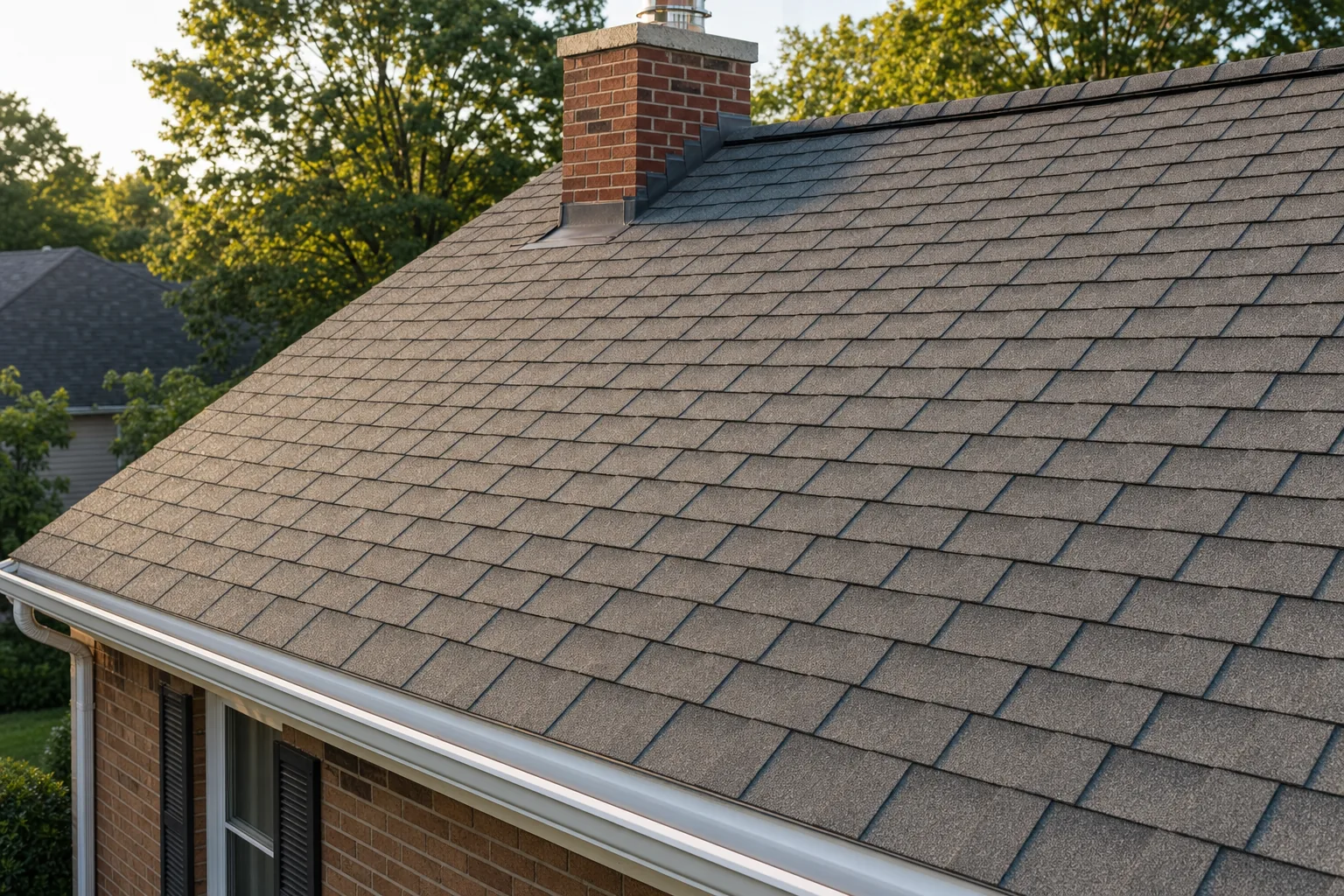
Asphalt shingle pricing in the Nashville metro sorts cleanly into three grades, and the grade you pick moves the total more than any other single decision. Roofers price by the square. One square equals 100 square feet of roof surface, and it is the unit worth learning before you read a bid.
| Shingle grade | Per square | Per sq ft | Typical 30-square roof | Expected life |
|---|---|---|---|---|
| Economy (3-tab) | $400–$500 | $4.00–$5.00 | $12,000–$15,000 | 20 years |
| Mid-range (architectural / dimensional) | $500–$700 | $5.00–$7.00 | $15,000–$21,000 | 30 years |
| Premium (designer / luxury) | $800–$1,000 | $8.00–$10.00 | $24,000–$30,000 | Longest (compare warranties) |
Those are our own Middle Tennessee figures, the same per-square pricing that drives our roof cost calculator, set from what quotes in this metro actually come in at. Expected lifespans are the standard ones published by InterNACHI, the home-inspector association, which rates 3-tab asphalt at 20 years and architectural at 30.
It is worth knowing how that compares to the national picture, because the gap is real. This Old House, in a guide updated March 12, 2026, puts asphalt shingle installation at $3.44 to $12.00 per square foot nationally: $8,419 to $11,665 for standard asphalt on a 2,000 square foot house, and $11,914 to $16,436 for architectural. Middle Tennessee quotes routinely land above those national midpoints, and a Nashville homeowner who budgets from a national average is the one who gets sticker shock when the bids arrive.
Both are right, and the gap between them is the real lesson. Premium-service contractors carrying full crews, manufacturer certifications, and long workmanship warranties price at the top of those bands. Volume operators and storm-chasers price at the bottom. The same house can draw bids thousands of dollars apart depending on which end of that market you call, which is exactly why comparing three written bids matters more here than picking a number off a chart.

Why “per square” beats “per square foot” when you read a bid
Your roof is bigger than your house. A 2,000 square foot single-story home with a moderate 6/12 pitch has roughly 2,240 square feet of roof surface before waste, and a steeper or more cut-up roof pushes that higher still. Contractors then add a waste allowance on top, commonly around a tenth of the total, to cover cuts, valleys, and starter courses. That is why a “2,000 square foot house” quote and a “30 square roof” quote can describe the same job. When you compare bids, confirm every one of them is priced on the same square count.
You can get your own square count in about two minutes with our roof cost calculator. Outline your roof on the satellite map and it applies the pitch and waste math for you.
The complete line-item breakdown: what you’re actually paying for
A roof replacement is not one product, it is roughly a dozen. Here is every component that shows up on a Middle Tennessee bid, with what each typically costs.
Most of what you are paying for is labor, and the U.S. Bureau of Labor Statistics explains why the crew rate on your bid looks nothing like a wage. The median roofer earned $55,440 a year as of May 2025, about $26.65 an hour, with the top 10% above $81,720. The hourly figure a contractor bills is several times that wage, and the difference is not profit: it covers payroll taxes, workers’ compensation, general liability, vehicles, equipment, warranty reserve, and the crew’s unbillable hours. Roofing carries one of the highest injury and fatality rates of any occupation in the country, which is exactly why insurance is such a large share of a legitimate roofer’s overhead, and why the bid from an uninsured crew is cheaper.
| Line item | Typical cost | Is it optional? |
|---|---|---|
| Tear-off and removal of old shingles | $1.00–$5.00 per sq ft | No, unless a layover is allowed |
| Flashing replacement | $200–$500 | No |
| Skylight installation or replacement | $1,600–$4,200 each | Only if you have them |
| Attic fan / added ventilation | $300–$900 | Often the best-value upgrade |
| Gutters, if replaced at the same time | $1,000–$6,500 | Optional, but cheaper done together |
| Underlayment (felt or synthetic) | Included; synthetic is the upgrade | No |
| Decking repair (rotted sheathing) | Priced per sheet, found after tear-off | Unknown until the roof is open |
| Building permit (Davidson County, $20k job) | $135 | No (see the permit section) |
Tear-off and disposal: the line most homeowners try to skip
Tearing off and hauling away the old roof runs $1.00 to $5.00 per square foot, per This Old House’s 2026 figures. On a 30-square roof that is a meaningful chunk of the bid, and it is the first thing a cut-rate quote quietly removes by proposing to shingle over your existing layer instead.
A layover is cheaper today and more expensive over the life of the roof. It traps heat against the old shingles, shortens the new roof’s life, hides any rotted decking underneath, and doubles the tear-off cost next time. The model residential code that Metro Nashville enforces also limits a roof to two layers of shingles, so a second layover is generally off the table. Confirm the current limit with your jurisdiction. If a bid is unusually low, check whether it includes a full tear-off before you assume you found a bargain.
Decking: the one number nobody can quote honestly up front
Nobody knows the condition of your roof deck until the shingles come off. Reputable Middle Tennessee contractors handle this with a written per-sheet allowance in the contract: a set price per sheet of replacement OSB or plywood, with the count settled after tear-off. A bid with no decking clause at all is not a cheaper bid; it is an unpriced change order waiting to happen.
Ask every bidder the same two questions: what is your per-sheet price, and how many sheets are included before it starts costing extra? The difference between contractors on this single line has settled more Nashville-area disputes than any other.
Underlayment, flashing, and the parts that keep water out
Underlayment is bundled into the per-square price, but the type is not. Traditional 30-lb felt is the default; synthetic resists tearing, holds up if the roof is left dry-in for a few days, and handles Middle Tennessee’s summer heat load better. On a 30-square roof the upgrade is a few hundred dollars, and it is one of the better-value line items on the whole bid. Ask which one the bid assumes, by product name.
Flashing is where roofs actually fail. Valleys, sidewalls, chimneys, and pipe penetrations leak long before the field shingles wear out, and This Old House puts flashing replacement at $200 to $500. Reusing old flashing to save money is a false economy. If a bid mentions “reuse existing flashing,” price the alternative before you sign.
Roofing permits in Middle Tennessee: the real fees, by county
Permit costs are usually waved off with a vague range. The actual fees are published, they are formulas, and they are lower than most people expect. Here is the arithmetic for the two largest Middle Tennessee jurisdictions, straight from the fee schedules.
Davidson County (Metro Nashville)
Metro Nashville requires a building permit to install roofing. It is item 8 on the department’s list of work requiring a permit, per the Residential Building Permit Procedures page, last updated October 31, 2025. The 2025 Building Permit Fee Schedule (ordinance BL2022-1215) builds a residential permit from three parts:
- Zoning examination fee: $25
- Building valuation fee: $5.00 per $1,000 of total job valuation for one- and two-family homes and townhouses
- Codes tech fee: 10% of the building valuation fee
Plan review is not charged: one- and two-family dwelling permits are explicitly exempt from the plans examination fee. So the math on a real job is simple:
| Job valuation | Valuation fee | Codes tech fee | Zoning exam | Total permit |
|---|---|---|---|---|
| $15,000 | $75.00 | $7.50 | $25 | $107.50 |
| $20,000 | $100.00 | $10.00 | $25 | $135.00 |
| $25,000 | $125.00 | $12.50 | $25 | $162.50 |
| $30,000 | $150.00 | $15.00 | $25 | $190.00 |
Williamson County (Franklin, Brentwood, Nolensville area)
Williamson County’s Schedule of Permit Fees uses a different formula: $15.00 for the first $1,000 of valuation, plus $5.00 for each additional $1,000 or fraction of it, up to $50,000. A $20,000 roof therefore costs $15 + (19 × $5) = $110. A $25,000 roof costs $135.
One clause in that schedule is worth more than the fee itself. Under Section B104, if work starts before the permit is pulled, the fees are doubled, and paying the double fee does not excuse you from complying with the code anyway. If a contractor offers to start Monday and “sort the permit out later,” that is your cue to ask why.
Check your jurisdiction, not just your county. Incorporated cities frequently run their own codes departments with their own fee schedules, so a Franklin address and an unincorporated Williamson County address can be permitted by different offices. Rutherford County (Murfreesboro, Smyrna) publishes its own schedule as well; confirm the current figure with the county before you budget it.
Roof repair costs in Middle Tennessee, and when repair is the wrong call
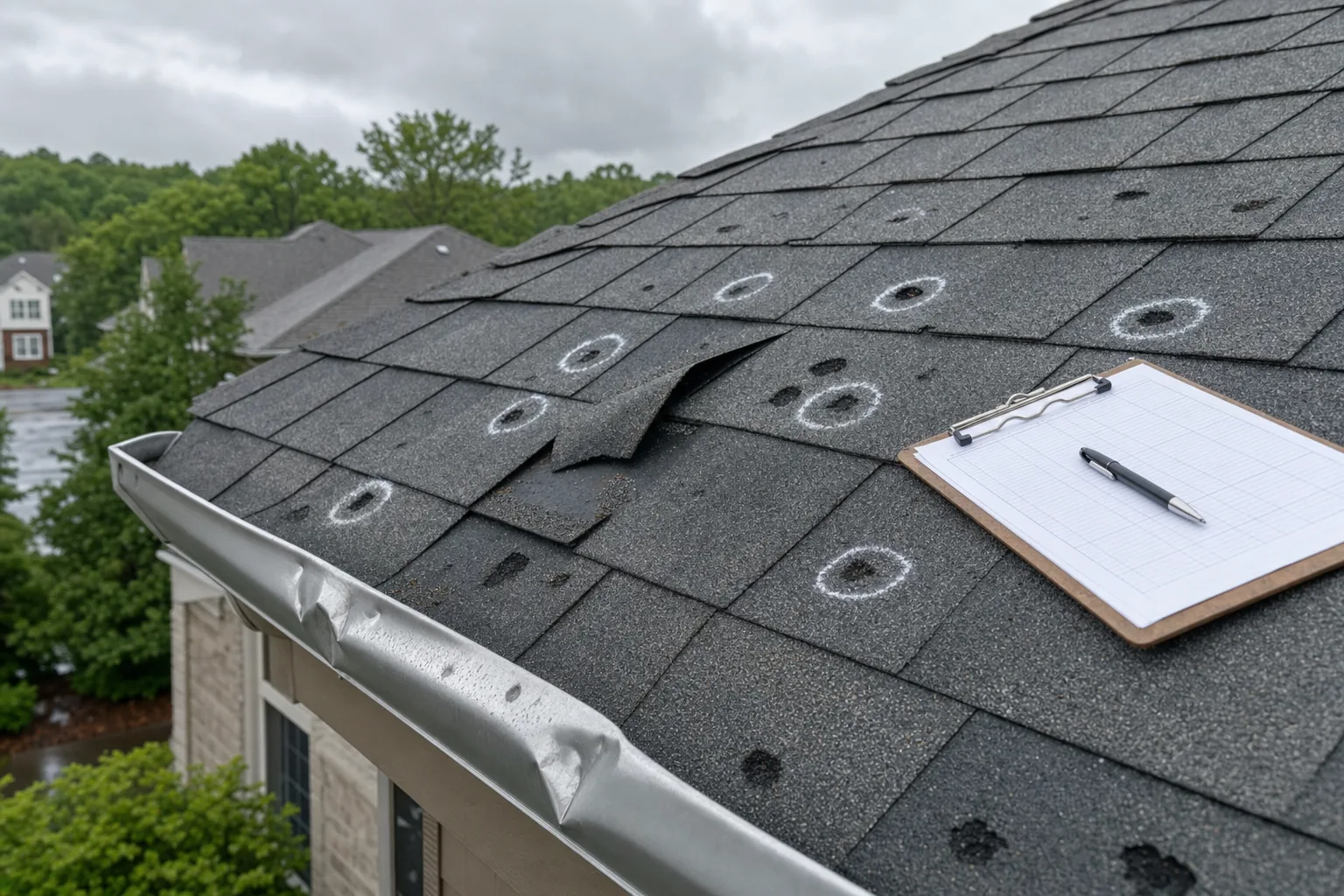
Most roof repairs in the Nashville metro land somewhere between a few hundred dollars and a few thousand, and where you fall depends almost entirely on whether water has reached the structure. A pipe boot replacement or a handful of blown-off shingles sits at the bottom. Flashing work, the most common real repair, runs $200 to $500 on This Old House’s 2026 figures. Once a leak has been running long enough to saturate decking and insulation, you are into four figures, because the job is no longer roofing alone. Our repair-versus-replacement guide works through where that line falls on your roof.
There is also a permit line worth knowing, because it is the cleanest rule in Metro’s code. Nashville does not require a permit for “repairs to an existing roof not to exceed 33 percent of the roof area,” which it classifies as normal maintenance. Cross that third-of-the-roof threshold and you are in permit territory. It is a useful sanity check on a contractor’s framing: a job described as a simple repair that happens to cover half your roof is a partial replacement, and should be permitted and priced like one.
The math that decides repair vs. replace
Compare cost per year of remaining life, not sticker price. A $1,500 repair that buys three more years costs $500 a year. An $18,000 architectural roof, rated by InterNACHI at 30 years, costs about $600 a year, and it resets your storm exposure, your warranty, and your insurability at the same time. Once a roof is past roughly 70% of its rated life, repair money is usually rent, not investment.
What drives price up in Middle Tennessee specifically
Four local factors show up on Nashville-area bids more than they do elsewhere:
- Pitch and complexity. Steeper roofs need staging and fall protection, and cut-up roofs with dormers, multiple planes, and long valleys burn labor hours. Pitch, existing layers, roof penetrations, and site access are the four multipliers that move a Middle Tennessee bid most.
- Storm season demand. Middle Tennessee’s spring hail and straight-line wind events spike demand across the metro at once. Prices and lead times both move when every crew in three counties is booked.
- Heat and humidity load. Summer attic temperatures are what age a Middle Tennessee roof from underneath, which is why ventilation and underlayment quality matter more here than in a milder climate.
- Where you are in the metro. Crew travel time, local demand, and what the surrounding market will bear all move the number. The same roof does not cost the same in Green Hills and in Dickson, which is why a quote sourced from one city is a poor guide to another.
How to compare three roofing bids without getting fooled
The cheapest bid and the best value are rarely the same document. Put all three side by side and check these seven lines before you look at the total:
- Square count. Are all three pricing the same roof size?
- Tear-off vs. layover. A layover bid is not comparable to a tear-off bid.
- Decking allowance. Per-sheet price and included sheet count, in writing.
- Underlayment type. Felt or synthetic, named by product.
- Flashing. New, or reused?
- Warranty. Manufacturer material warranty and the contractor’s separate workmanship warranty. They are two different things, and the second is the one that fails you.
- Permit. Who pulls it, and is the fee in the price?
Then verify the license. Tennessee licenses contractors through the state Board for Licensing Contractors, and license status is publicly searchable. Licensing thresholds vary by project value and by county, so check the roofer’s number against the state registry rather than taking a card at face value. A contractor who cannot produce a license number and a certificate of insurance has told you what you need to know.
Frequently asked questions
How much does a new roof cost in Nashville in 2026?
Most Nashville-area asphalt shingle replacements run $13,500 to $27,000 installed, or $450 to $900 per roofing square, with architectural shingles on an average home landing between $15,000 and $21,000. National benchmarks sit lower. This Old House puts architectural asphalt at $11,914 to $16,436 on a 2,000 square foot house, so budget from local numbers, not national ones.
How much is a roofing permit in Nashville?
For a $20,000 residential re-roof in Davidson County, $135: a $100 building valuation fee ($5 per $1,000), a $10 codes tech fee (10% of that), and a $25 zoning examination fee. One- and two-family homes are exempt from the plan review fee. Williamson County charges $110 on the same job.
Do I need a permit to repair my roof in Nashville?
Not if the repair covers 33% or less of the roof area, which Metro Nashville classifies as normal maintenance. Anything larger requires a building permit.
How long does an asphalt shingle roof last in Tennessee?
InterNACHI, the home-inspector association, rates 3-tab asphalt at 20 years and architectural at 30. Middle Tennessee’s summer heat and humidity push real-world lifespans toward the lower end, and attic ventilation is the single biggest factor in whether you reach the rated life or fall short of it. Designer shingles are built to outlast architectural; compare the manufacturer’s warranty term rather than a rule of thumb. We went through what heat, freeze-thaw and humidity actually do to those numbers across Middle Tennessee.
Is it cheaper to repair or replace a roof?
A repair runs a few hundred to a few thousand against $13,500 or more for a replacement, so a repair is almost always cheaper today. Compare cost per year of remaining life instead: past roughly 70% of a roof’s rated lifespan, about 21 years into a 30-year architectural roof, repairs stop being an investment.
Does insurance cover a roof replacement in Tennessee?
Homeowners policies generally cover sudden storm damage (hail, wind, impact) and generally exclude wear-out and age. Whether you are paid actual cash value or replacement cost depends on your specific policy language, so read your declarations page and confirm the terms with your carrier or adjuster before you assume a number.
Get real numbers for your roof
A guide gives you the range. Only a contractor on your roof gives you the price. Nashville Builders Pro matches you with licensed, insured Middle Tennessee roofers so you can compare written bids side by side. Free, no obligation, about 60 seconds to start.
Get a free quote from our sponsor, a licensed Nashville roofer →
Browsing by city? Start with roofers in Nashville, Murfreesboro, Franklin, Hendersonville, or Gallatin. If the walls need attention at the same time, we costed every material the same way in our Middle Tennessee siding guide. If a storm caused the damage, read our guide to handling a Nashville roof insurance claim first.
Cost figures current as of September 2026. Per-square pricing is Nashville Builders Pro’s own Middle Tennessee model; national benchmarks from This Old House (updated March 2026); shingle lifespans from InterNACHI; wage data from the U.S. Bureau of Labor Statistics (May 2025); permit fees from the Metro Nashville 2025 Building Permit Fee Schedule and the Williamson County Schedule of Permit Fees. Verify current permit fees with your jurisdiction before budgeting.